The State of Healthcare Communication in India
India is home to 1.4 billion people, yet the country has roughly 1 doctor for every 1,000 citizens — far below the WHO-recommended ratio of 1:250. In rural areas, this gap widens dramatically. But the challenge isn't just about the number of doctors. It's about how healthcare is communicated, coordinated, and delivered across a fragmented system.
Every day, thousands of Indian clinics operate under immense pressure. A single doctor might see 60 to 80 patients in an 8-hour shift. Between handwritten prescriptions, manual appointment scheduling, phone calls from patients seeking follow-ups, and coordination with pharmacies and pathology labs, the communication overhead is staggering.
The result? Missed follow-ups, prescription errors, delayed lab reports, and patients who fall through the cracks — not because of negligence, but because human bandwidth has limits.
The Communication Gaps That Cost Lives
Healthcare in India has traditionally relied on a patchwork of phone calls, paper records, and in-person visits. Consider a typical patient journey:
Appointment Booking
A patient calls the clinic. The phone rings unanswered because the receptionist is busy with another patient. The patient tries again later, or worse, gives up entirely and delays care.
Prescription Delivery
After a consultation, the doctor writes a prescription on paper. The patient walks to a pharmacy and hands it over. If the handwriting is unclear, the pharmacist calls the clinic — another interruption for the doctor.
Lab Coordination
The doctor orders blood work. The patient visits a pathology lab, gets tested, and then must return to the clinic days later to discuss results. There is no automatic notification when reports are ready.
Follow-Up Care
Post-treatment follow-ups are critical, especially for chronic conditions like diabetes and hypertension. But most clinics have no systematic way to remind patients. Studies suggest that up to 40% of patients in India skip recommended follow-up visits.
Each of these gaps represents not just an inefficiency, but a potential health risk.
Why Traditional Solutions Fall Short
Over the past decade, several Electronic Health Record (EHR) and clinic management systems have entered the Indian market. Many are well-designed, but they share a common limitation: they digitize records without transforming communication.
A digital prescription stored in a database is an improvement over paper, but it doesn't solve the problem of getting that prescription to the pharmacy instantly. An online appointment calendar is better than a paper register, but it doesn't help when no one is available to answer the clinic phone.
The missing piece has always been intelligent, automated communication — technology that doesn't just store information but actively moves it between the right people at the right time.
How AI is Bridging the Gap
Artificial intelligence, particularly when combined with India's existing communication infrastructure, is uniquely positioned to solve these problems. Here's how:
WhatsApp as the Healthcare Highway
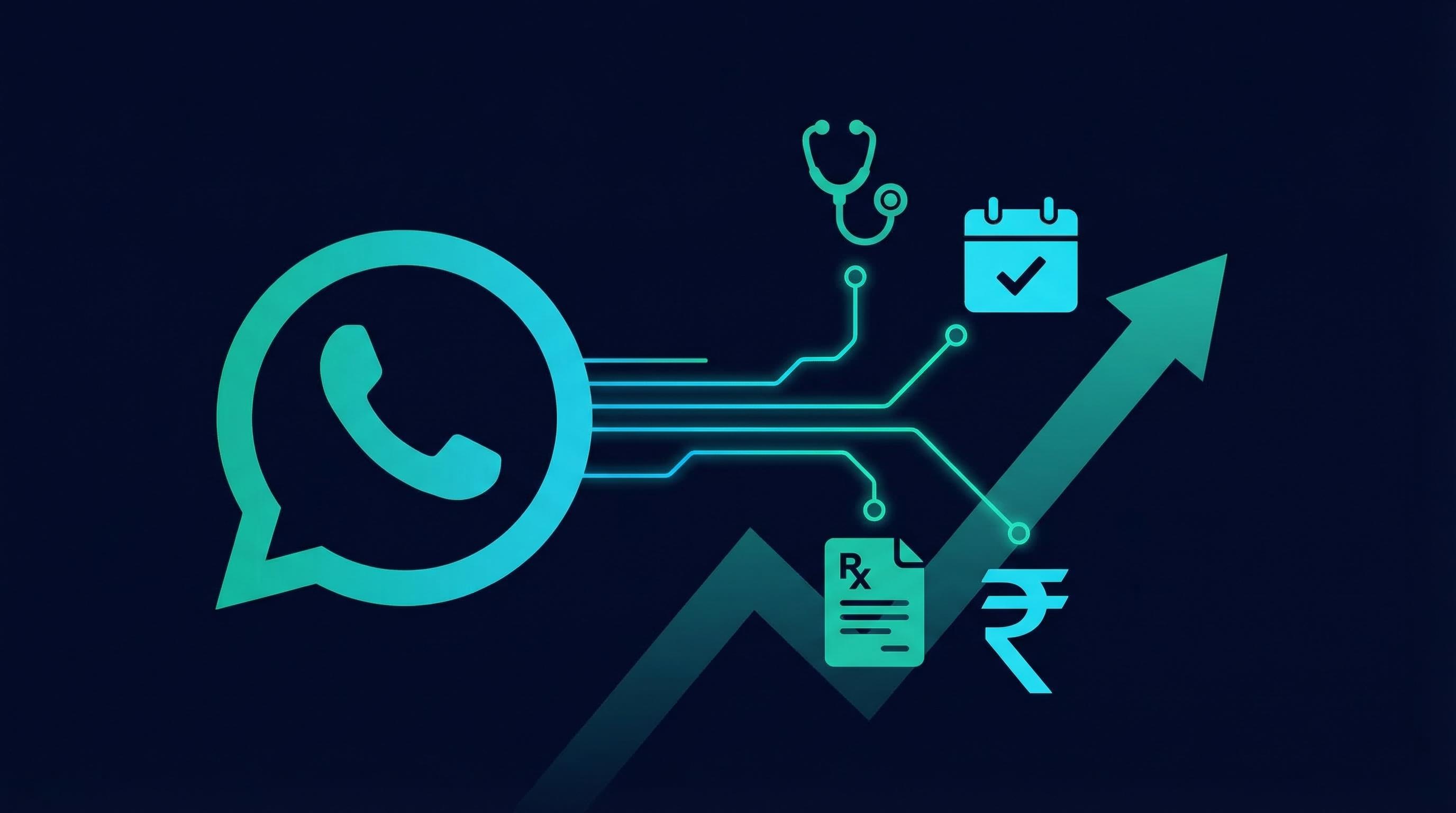
India has over 500 million active WhatsApp users. It is the country's de facto communication platform, used across age groups, income levels, and urban-rural divides. When a clinic communicates with patients via WhatsApp, it meets them where they already are.
AI-powered WhatsApp automation can handle appointment confirmations, send digital prescriptions directly to patients' phones, deliver lab reports as soon as they're ready, and send follow-up reminders — all without manual intervention from clinic staff.
Voice AI for the Front Desk
Phone calls remain the primary way patients reach clinics, especially in Tier 2 and Tier 3 cities. An AI-powered voice receptionist can answer calls in Hindi, English, or regional languages, understand patient intent, book appointments, and even detect emergencies — ensuring that no call goes unanswered.
Smart Prescriptions
AI can assist doctors during consultations by suggesting drug interactions, flagging allergies, and auto-formatting prescriptions for clarity. The prescription is then instantly available to both the patient (via WhatsApp) and the linked pharmacy (via the platform), eliminating delays and reducing errors.
Automated Lab Integration
When a pathology lab uploads test results, AI can automatically notify the patient, share the report, and alert the doctor — closing the communication loop that traditionally required multiple phone calls and an in-person visit.
Real Impact: What Changes for a Clinic
When a clinic adopts AI-driven communication, the day-to-day transformation is significant:
- Zero missed calls: Every patient inquiry is handled, even after hours
- 50% reduction in no-shows: Automated reminders keep patients on schedule
- Faster pharmacy coordination: Digital prescriptions reach the pharmacy before the patient does
- Better chronic care management: Follow-up reminders improve treatment adherence
- More time for actual care: Doctors spend less time on administrative tasks and more time with patients
The Road Ahead
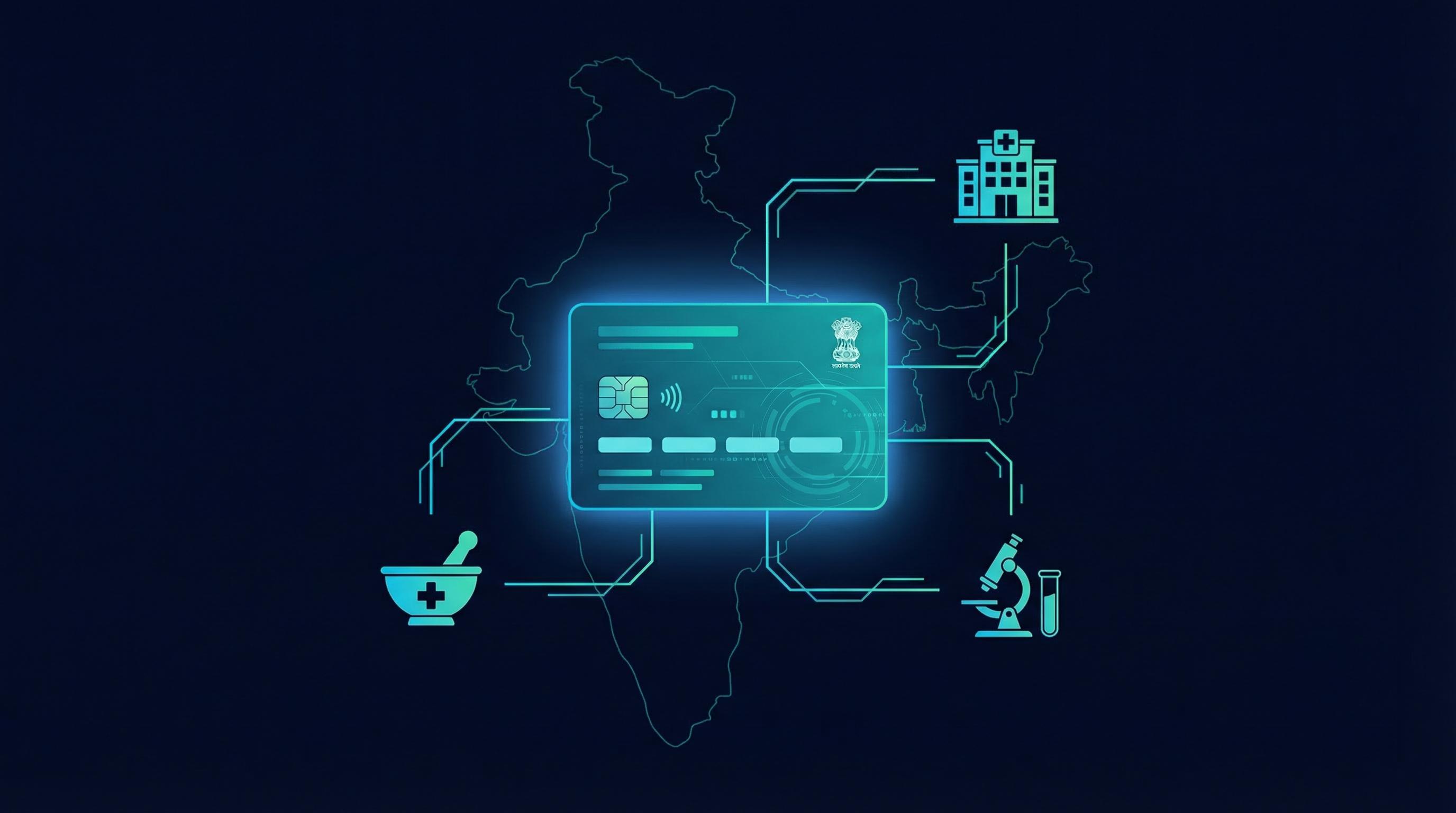
India's healthcare system is at an inflection point. The government's Ayushman Bharat Digital Mission (ABDM) is building the rails for a connected health ecosystem. Private innovation in AI communication is building the trains that will run on those rails.
The clinics that adopt these tools today will not only operate more efficiently — they will deliver measurably better patient outcomes. And in a country where healthcare access is unevenly distributed, that efficiency can be the difference between a patient receiving timely care or being lost to the system.
Getting Started
If you run a clinic in India and want to see how AI-powered communication can work for your practice, book a free demo with our team. We'll walk you through exactly how WhatsApp automation, Voice AI, and smart prescriptions can fit into your existing workflow — with zero disruption to your daily operations.